

Home/ Service areas/ Wyoming
Service area / WY
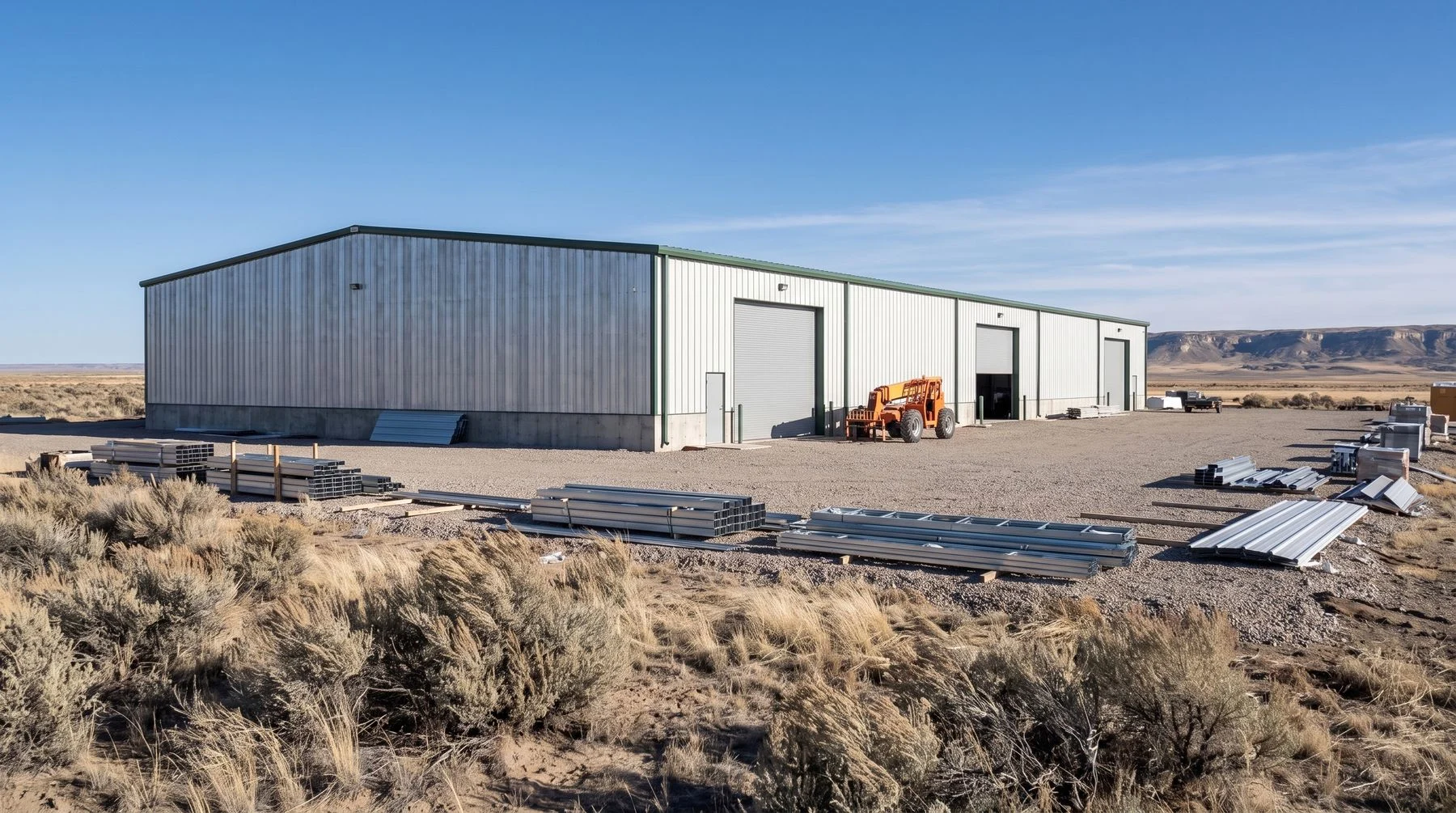
Commercial steel framing and PEMB erection in Wyoming
Stalcup Construction is licensed in Wyoming and builds across the state, along the I-80 corridor through Cheyenne and Laramie and north up I-25 to Casper and the Powder River Basin. We erect pre-engineered buildings and frame in cold-formed steel for industrial and distribution work.
In short
Wind governs, not snow.
Stalcup Construction is licensed in Wyoming and builds along the I-80 and I-25 corridors. The I-80 corridor pulls distribution and trucking operators into Cheyenne and Laramie, while energy and resource work keeps demand for service and fleet buildings steady further north.
Wind load governs the structure across most of the state, where snow is the lesser problem.
Licensing
Licensed and insured in Wyoming.
Stalcup Construction is licensed and insured for commercial work in Wyoming, one of eight states in our footprint. Wyoming does not maintain a single statewide contractor license, so requirements run at the city and county level, and we register where a project requires it before work starts rather than after.
Both services
Both services, across Wyoming.
Cold-formed steel framing
Interior and structural steel stud framing, done by our own crews. In Wyoming it usually shows up inside an industrial or distribution shell rather than as the primary red iron frame carrying the roof.
PEMB steel buildings
Clear-span pre-engineered buildings engineered for the wind that comes with the site. Distribution and trucking buildings out on the corridor, and equipment and service shells north toward the basin.
What Wyoming is building
An industrial spine, and the wind across it.
The I-80 corridor is the state's industrial spine
It runs east to west through Cheyenne and Laramie and it is the reason distribution and trucking operators site here: central position, low operating cost, and a straight run to the Front Range and out to the Midwest. Cheyenne's business parks have been adding warehouse space and absorbing it into regional distribution.
Cheyenne is being built out for data-intensive industry
The state has leaned deliberately into low-cost power and a light regulatory posture to attract that investment, and utility infrastructure is being upgraded behind it. What that means for a contractor our size is not the campuses themselves. It is the second-order effect: developments of that scale pull in contractors, suppliers and fleet operators who all need ordinary industrial buildings nearby.
Energy and resource extraction still set the tempo
North of the corridor, around Casper and up into the Powder River Basin at Gillette. Those operations need service buildings, equipment shelter and fleet space, and they need them built to survive being used hard.
Wind is the governing structural condition
Across most of Wyoming, wind load drives the frame and the envelope more than snow does. That is not true in Montana and it is not true in Oregon. A building designed without accounting for it properly is a building with a problem, and the place to solve that is in the engineering rather than on site.
What it needs built
What Wyoming needs built.
The I-80 corridor puts operators here for central position and low operating cost, and what they need built is a clear-span shell with dock access and yard.
Casper, Gillette and the Powder River Basin all need equipment shelter, fleet space and service buildings that survive weather and constant heavy use.
Large industrial campuses pull in the businesses that serve them, and every one of those businesses needs an ordinary building within reach of the site.
Why Stalcup in Wyoming
Crews mobilize and stay.
Wyoming has the smallest population of any state and long distances between its towns. The pool of contractors who will travel to a site and stay there is small, and it gets smaller the further you are from Cheyenne.
That is how we have always worked. An out-of-state crew is not a compromise in Wyoming so much as the normal arrangement, and ours mobilize and stay on site rather than driving back to a town two hours away at the end of each day.
The structural argument is just as practical. A pre-engineered building arrives with the wind load already engineered into the frame, the connections and the envelope. In a state where wind is the condition that governs, having that settled before the steel ships matters more than it does almost anywhere else we work.
We are licensed in the state and the practical floor is around $50,000 once crews are traveling.
Owners and operators who hire direct
We put buildings up, we do not sell them in pieces.
Plenty of Wyoming work comes straight from the operator rather than through a general contractor, and we are happy to take it that way.
Shop buildings, equipment storage, fleet space, service buildings and industrial shells, built direct for owners and operators from around $50,000 once crews are traveling to the site.
The distinction is worth stating plainly, because most of what you will find searching for a steel building in Wyoming is a catalog: we put buildings up, we do not sell them in pieces. A catalog order arrives and the erection becomes your problem to solve. Solving that is the job we actually do.
Where we work
Where we work in Wyoming.
Crews travel to the site and stay through the work.
Frequently asked questions
Four about this state.
Do you work the I-80 corridor and the Powder River Basin?
How do you handle Wyoming wind loads?
Do you travel to remote Wyoming sites?
Do you build warehouse and distribution buildings?
Keep going
Send a drawing set and we will price it
Wind engineered into the frame, and crews that stay on site.
Crews mobilize out of Central Oregon and stay on site until the work is finished.