

Home/ Service areas/ Arizona
Service area / AZ
Commercial steel framing and PEMB erection in Arizona
Stalcup Construction erects pre-engineered metal buildings and frames in cold-formed steel across the western states, and is expanding into Arizona. Our work suits the Maricopa County industrial corridor through Goodyear, Buckeye and Mesa, and the I-10 run south to Tucson.
In short
Heat governs the envelope.
Stalcup Construction erects pre-engineered steel and frames in cold-formed steel across the western states, and is expanding into Arizona. Distribution and industrial construction here is concentrated in the Phoenix West Valley, and semiconductor investment pulls in suppliers who each need a building.
Heat governs the envelope in Arizona the way snow governs it further north.
Licensing
Licensed and insured in Arizona.
Stalcup Construction holds an Arizona business license and is currently completing its Arizona contractor license. We are licensed to build in Washington, Oregon, Idaho, Montana, Wyoming, Utah and Alaska today, and until the Arizona license issues we are not performing contracting work in the state. We would rather tell you exactly where that stands than imply a status we do not yet hold.
Both services
Both services, across Arizona.
Cold-formed steel framing
Steel stud framing, structural and non-structural, by our own in-house crews throughout. In a distribution or supplier building that usually means the interior framing rather than the structure that holds it up.
PEMB steel buildings
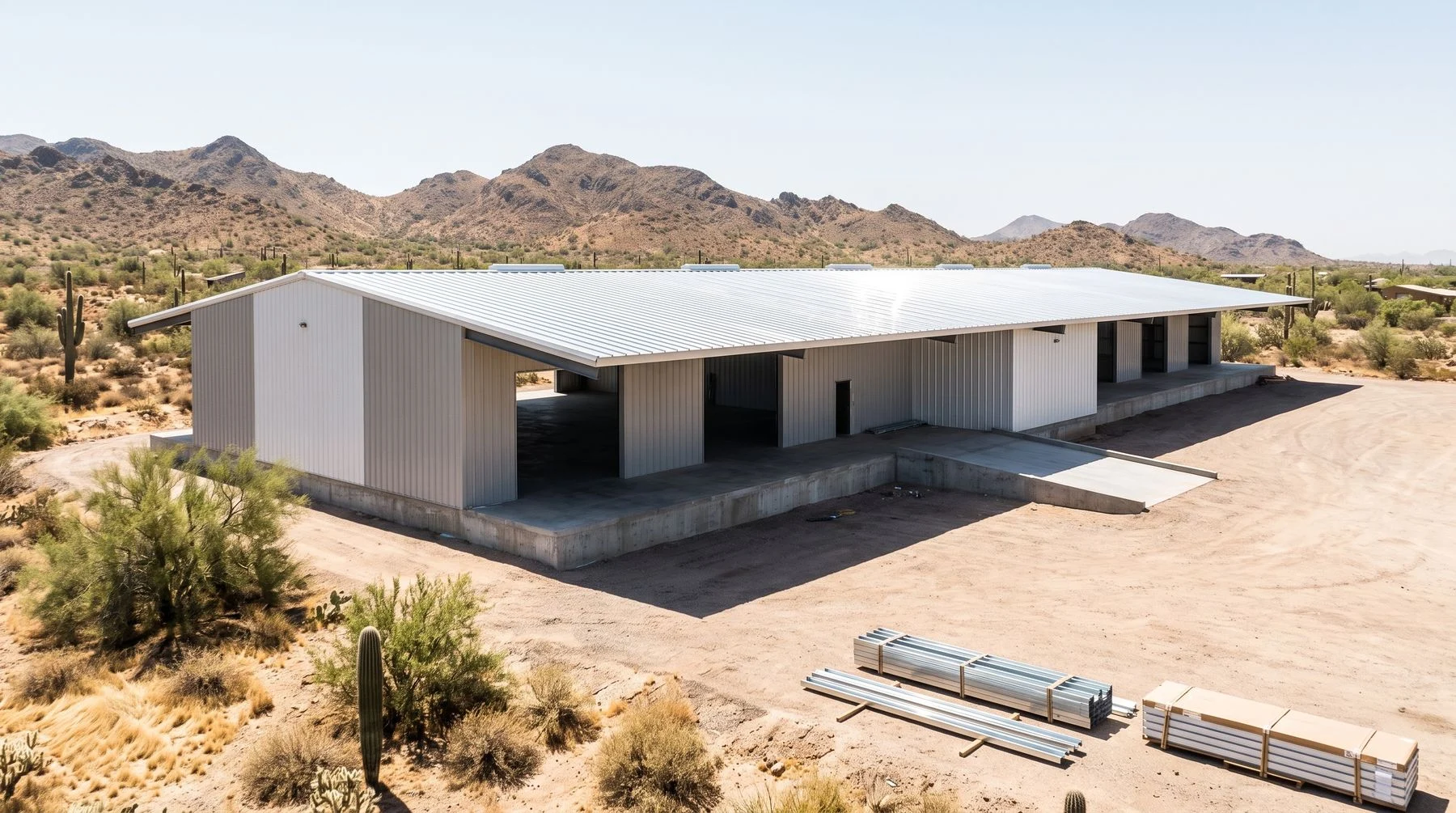
Clear-span pre-engineered buildings engineered for the thermal load that comes with the site. Distribution shells, supplier buildings and conditioned storage, assembled on-site rather than fabricated in the field.
What Arizona is building
Where Montana designs for snow, Arizona designs for heat.
The West Valley is where the industrial construction is
Goodyear, Buckeye, Glendale and Mesa carry large-scale distribution and build-to-suit development, with multi-building industrial parks running to very substantial square footage. Construction activity in the metro has been accelerating rather than cooling, which is not true of every market in the West right now.
Semiconductor investment is reshaping the supply chain
Large fabrication investment pulls in suppliers, logistics operators and service businesses, and every one of them needs a building. That second-order demand is far more accessible to a contractor of our size than the anchor projects are, and it is the honest opportunity in this state.
Maricopa County is one of the fastest-growing data center markets in the country
With multi-building campuses under development in Buckeye, Goodyear and Mesa. That is market context rather than a claim: we have not built a data center and we are not going to imply otherwise. What it means practically is more contractors, more suppliers and more fleet operators needing space nearby.
Heat governs the envelope
Where Montana designs for snow and Wyoming designs for wind, Arizona designs for thermal load and solar gain. Insulation, reflectivity and how a conditioned space is sealed are the decisions that matter most, and they get made before the steel is ordered rather than after the building is up.
A developer reading a contractor who knows which jobs are theirs can trust the ones they do claim.
What it needs built
What Arizona needs built.
West Valley build-to-suit development runs to very large square footage, and the building it needs is a clear-span shell with dock access and yard space.
Semiconductor investment pulls in businesses that each need their own space, usually far smaller than the anchor investment that brought them to the state.
Heat makes climate control a requirement rather than an upgrade, which turns the envelope into part of the mechanical system that holds a temperature.
Why Stalcup in Arizona
Crews mobilize and stay.
The honest positioning first: Arizona's headline projects are far larger than anything we take on alone, and we are not going to pretend otherwise on a website.
What we are right for is the tier underneath them, which is where most of the buildings in any market actually are. Supplier shells, distribution buildings, conditioned storage, fleet and service space. From around $50,000 up through projects a single general contractor can carry, and above roughly $20 million we partner with a larger general contractor rather than stretch.
The end-to-end point matters here as much as anywhere. One contractor erects the shell and frames the interior, which removes a subcontract from a schedule in a market where every trade is booked and the handoff between two subs is the thing that slips.
Owners and developers who hire direct
We raise steel, we do not sell it flat-packed.
Not every Arizona project runs through a general contractor. Owners and developers building shop space, conditioned storage, fleet buildings or industrial shells can deal with us directly, from around $50,000 once crews are traveling.
The distinction is the same one we make in every state: we raise steel, we do not sell it flat-packed. A delivered building is not a built one, and the gap between those two is a crew. We are that crew, and where there is framing inside we do that as well.
Where we work
Where we work in Arizona.
The I-10 corridor south to Tucson.
Frequently asked questions
Four about this state.
Will you take Phoenix metro projects?
What size projects do you take in Arizona?
How do you handle heat and conditioned space in Arizona buildings?
Are you licensed in Arizona?
Keep going
Send a drawing set and we will price it
Arizona next, and seven-figure projects run as GC.
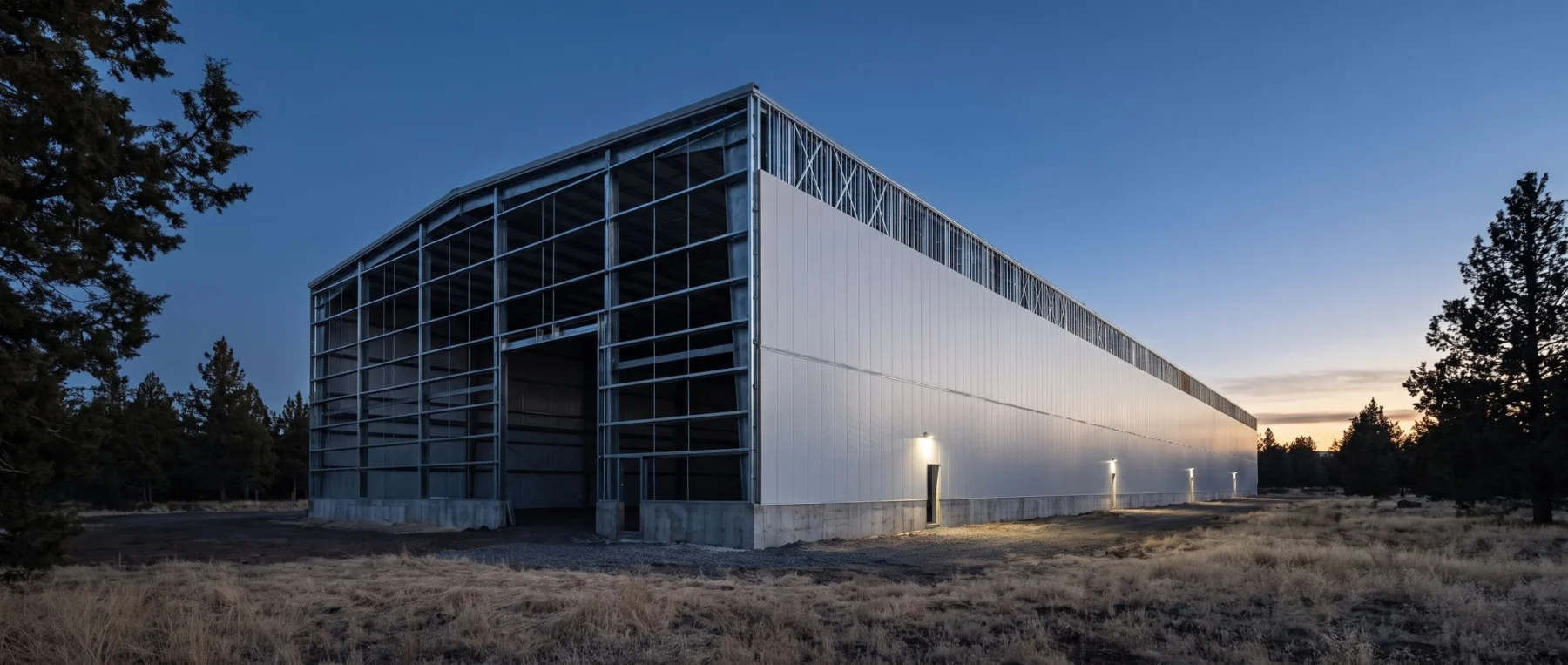
Crews mobilize out of Central Oregon and stay on site until the work is finished.