

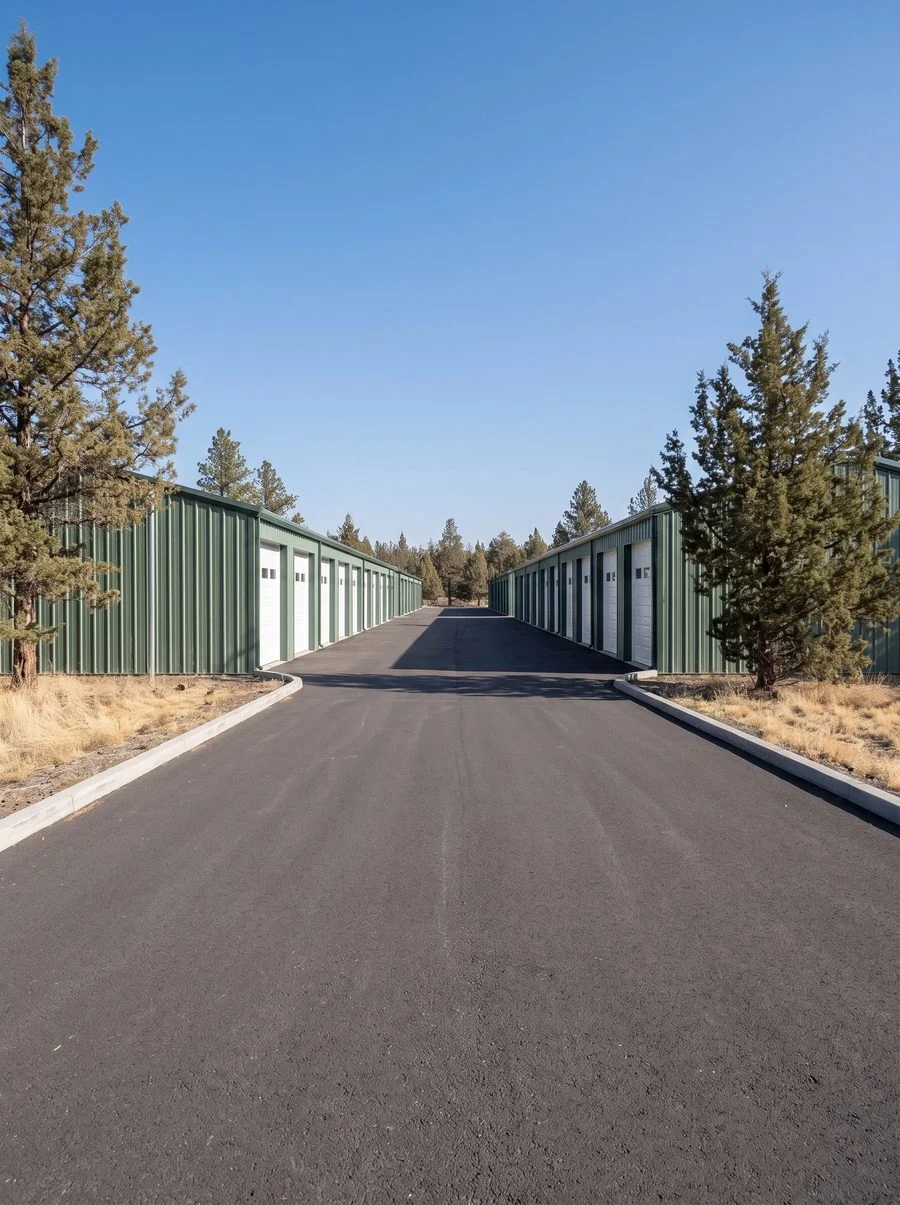
Drive-up storage units
Single-level rows, repeated hundreds of times across a site. Non-combustible, fast to frame, and the format our crews know better than anything else we build.
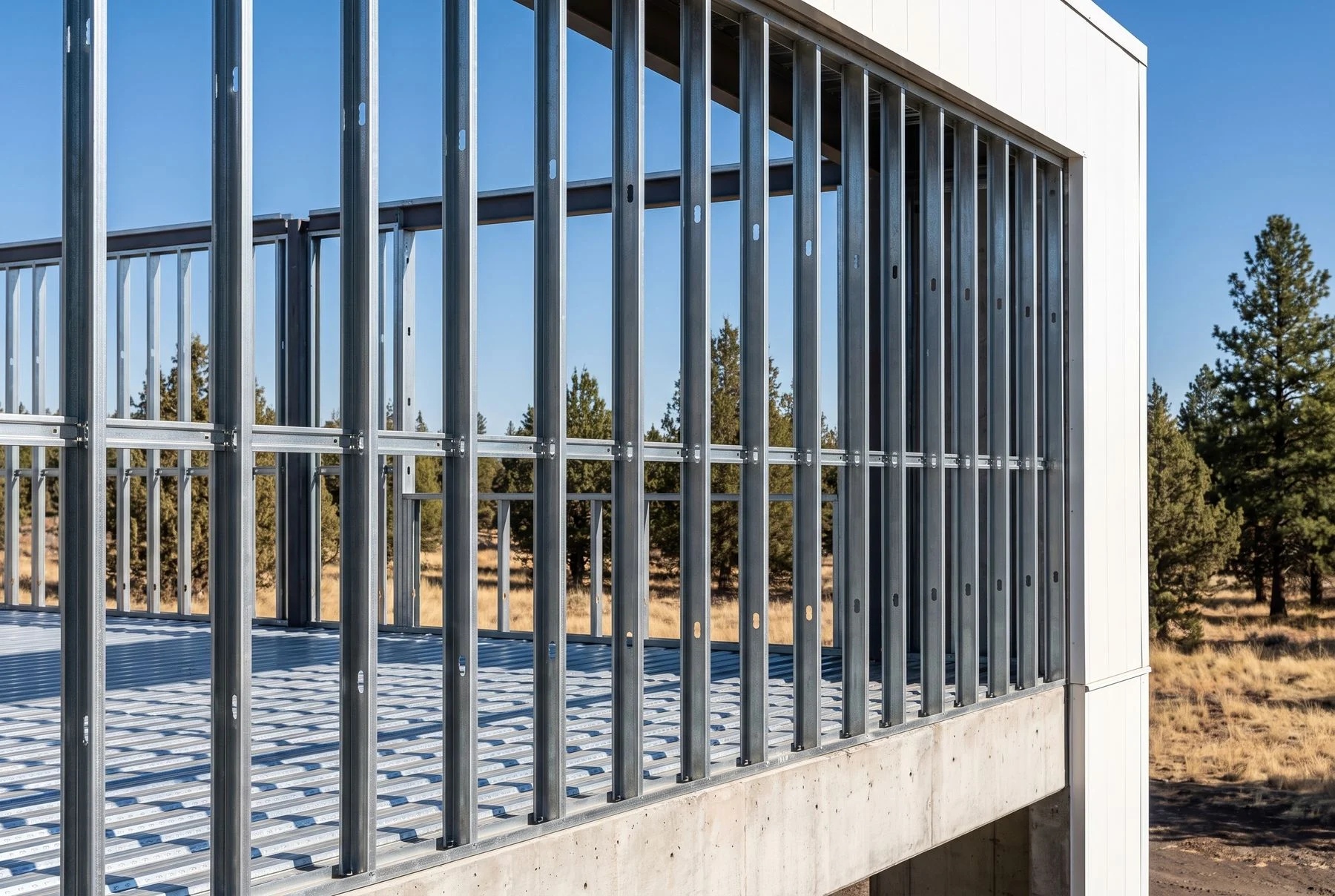
Home/ Cold-formed steel framing
Service
Stalcup Construction is a commercial metal framing contractor working in cold-formed steel across eight western states. We self-perform the framing on storage facilities, retail interiors and multi-story buildings, from drive-up units to load-bearing walls five floors up.
In short
Stalcup Construction is a commercial metal framing contractor working in cold-formed steel across eight western states. Storage leads the work: drive-up rows, RV bays, climate-controlled and multi-story load-bearing units.
Stalcup crews travel to the job and stay, working inside Procore and Outbuild alongside the other trades. The company has framed commercial steel for fifteen years, up to five stories in Eugene, Oregon.
What cold-formed steel framing is
An engineer writes cold-formed steel on a drawing, a superintendent says steel studs on site, and a supplier may say light gauge.
Cold-formed steel framing and steel stud framing are the same thing. So is light gauge framing. Different people on the same job site will use all three names for the same product, and a set of drawings might use a fourth.
It is steel formed cold into studs, track and joists, then assembled into walls, floors and structure. It is non-combustible, strong for its weight, dimensionally stable, and it does not rot or feed anything that eats a building.
The distinction that matters on a job site is gauge. Light gauge framing that holds nothing up is a different product decision from load-bearing cold-formed steel carrying floors above it, even though both get called steel studs in conversation. The drawings will say which one a scope is. If they do not, that is worth resolving before the bid rather than after, because the two do not price anything like each other.
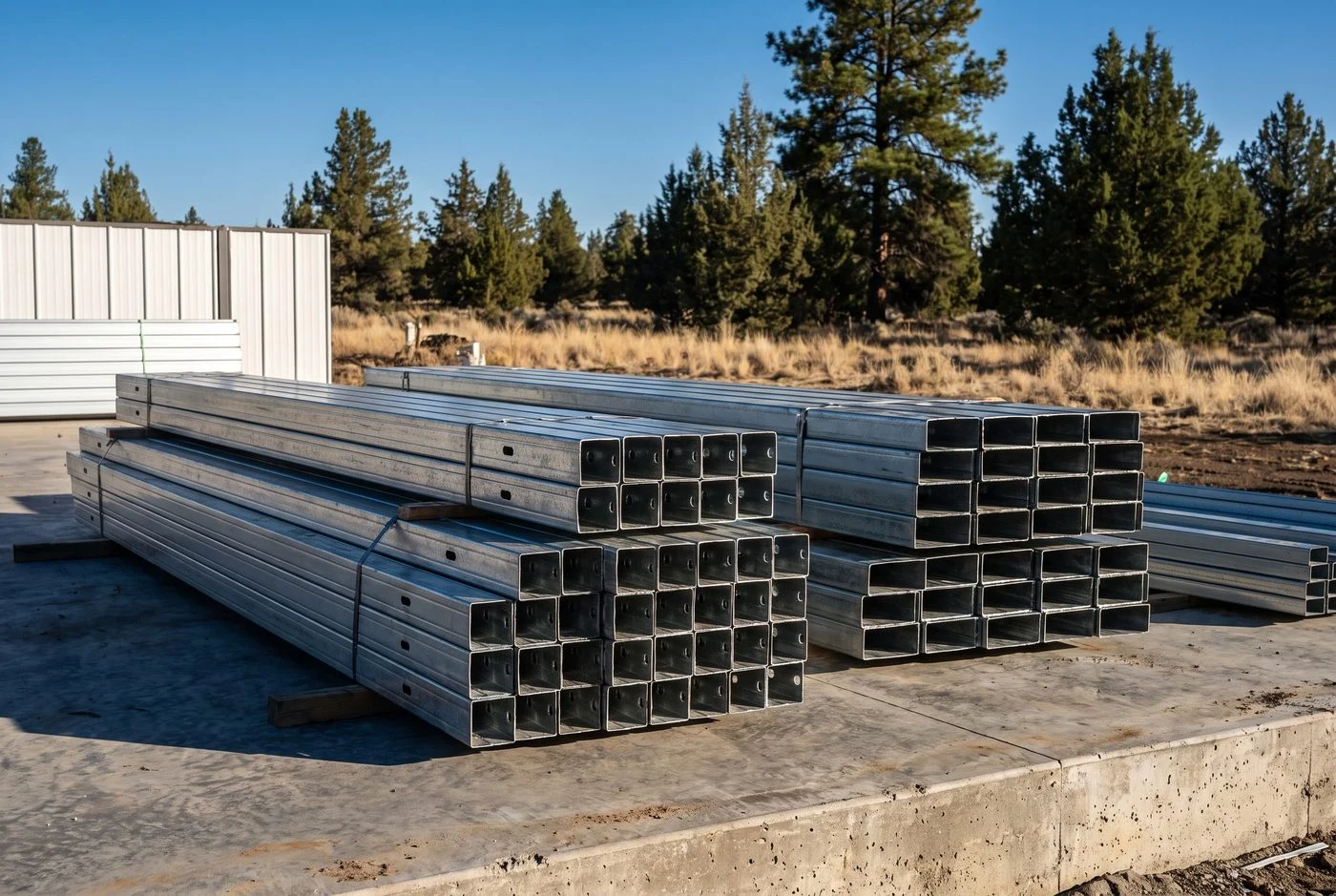
Storage framing, the work we do most
Single-level rows, repeated hundreds of times across a site. Non-combustible, fast to frame, and the format our crews know better than anything else we build.
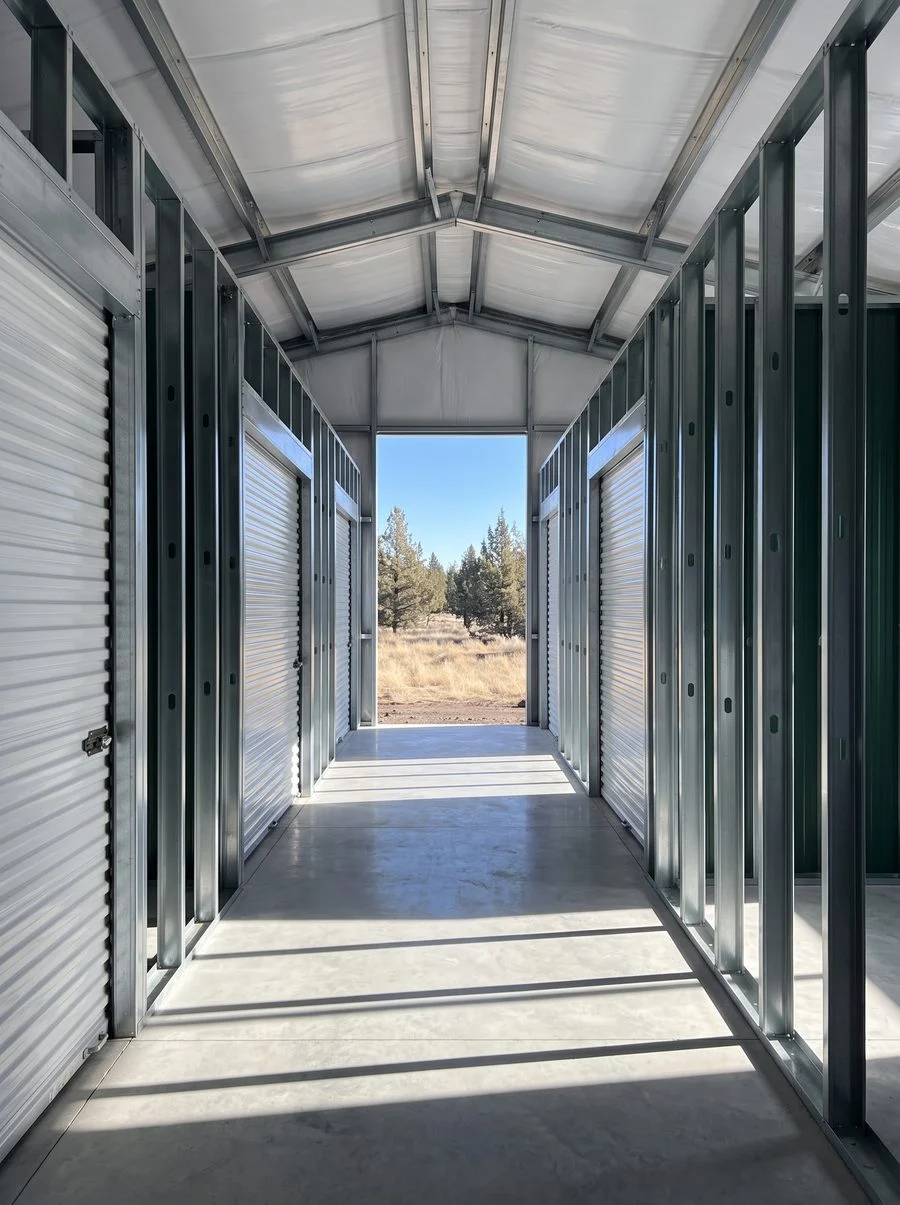
Taller bays and wider spans, most often framed inside a larger steel shell. Door height drives the framing package before anything else on the drawings does.
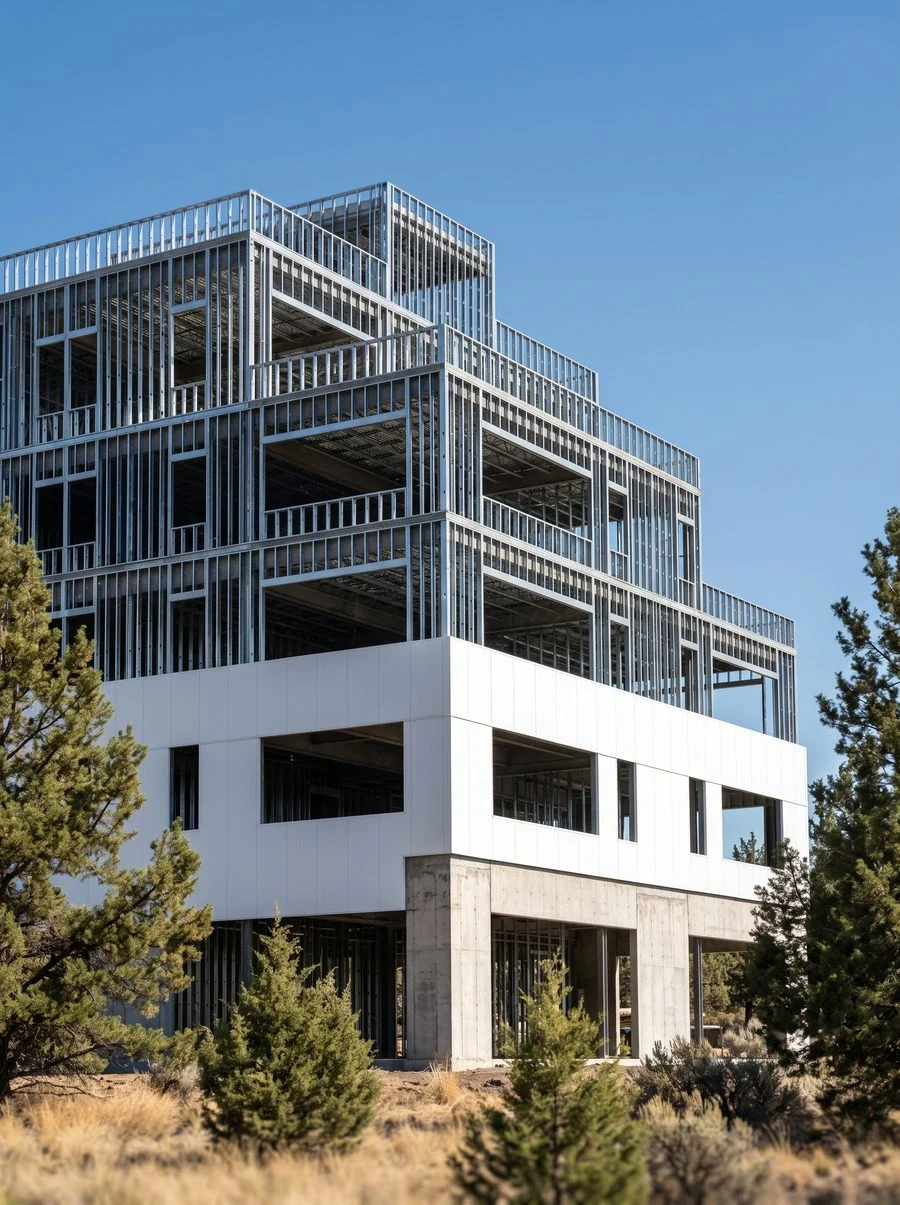
Load-bearing cold-formed steel carrying the upper floors of an urban infill facility, where the cost of land means the building has to go up rather than out.
Storage is what the crews know best
Cold-formed steel and self-storage fit together for reasons that show up on an operator's balance sheet rather than in a brochure.
Steel is non-combustible. On a building holding hundreds of other people's belongings, that is an insurance conversation and a code conversation before it is a preference. Light gauge is fast and repeatable, which matters when a facility is the same unit built three hundred times. And steel does not rot, warp or attract pests in a building that spends most of the year unconditioned and unvisited.
The work behind that is real. We framed a five-story U-Haul storage facility in Eugene, Oregon. We built a seven-figure U-Haul warehouse and storage facility in Ferndale, Washington as general contractor. Our crews are in Utah right now setting nineteen drive-up units.
There is a compounding effect people underestimate. A crew that has framed hundreds of identical storage units is materially faster on unit two hundred than on unit one, and that speed lands in the schedule rather than in a sales pitch. It is the single clearest reason to put a storage specialist on a storage job.
When the units sit inside a steel shell we erect that too. See PEMB steel buildings for the building around the framing.
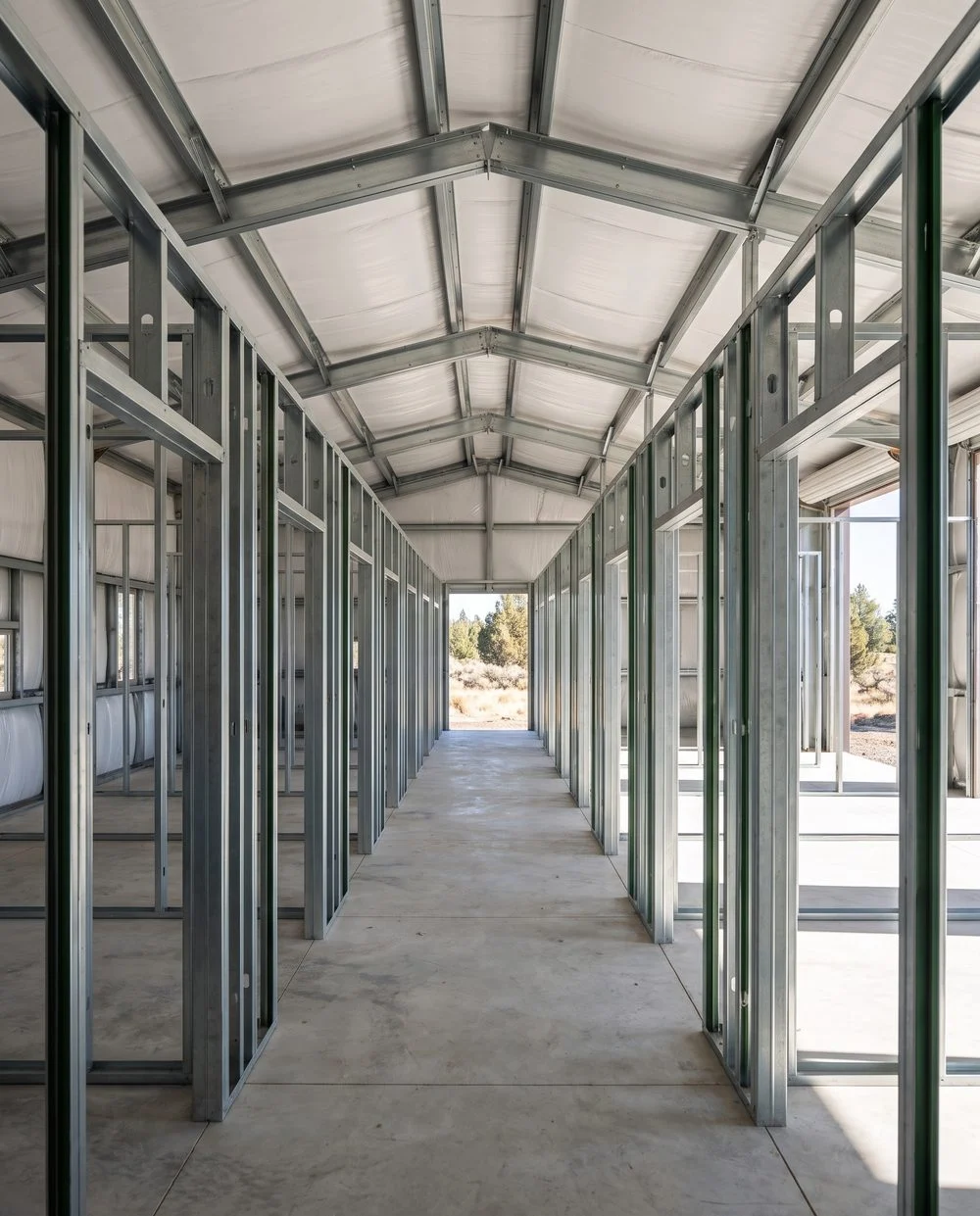
Load-bearing, non-load-bearing, and hybrid
Knowing where cold-formed steel stops is as useful as knowing what it does.
On the Eugene facility, heavy bolt-together red iron carried floors one and two. Load-bearing cold-formed steel carried three, four and five. That is the logic in one building: red iron takes the load where the load is greatest, cold-formed steel takes over above it, and the hybrid costs less than running red iron the whole way up.
At the other end of the range is non-live-load light gauge, where the framing holds nothing up. It is a metal box, and it is fast and inexpensive precisely because nothing structural depends on it. Both are cold-formed steel framing. Which one a project needs is a structural question, and it should be settled before anyone prices it.
Other buildings we frame
Interior steel stud framing on remodels and fit-outs, including the TJ Maxx-format retail work general contractors bring us through ConstructConnect. Fast, repeatable, and done around a live store.
Non-load-bearing exterior backup walls and curtain wall framing. Cold-formed steel does this on buildings whose primary structure is something else entirely, including concrete and red iron, and it is a scope we take on its own.
Working the schedule
Framing cannot start until the slab and the structure are ready, and almost everything after it waits on the walls being up. Mechanical, electrical and drywall are all standing behind the framing crew.
We work inside Procore and Outbuild on the general contractor's account, and we sequence framing so the trades behind us are not waiting on a wall that is half closed. Fifteen years of commercial work is fifteen years of not being the reason someone else is idle.
Framing is labor in a concentrated burst. A crew arrives, the walls go up, and the crew moves on. That only works if the crew is actually there for the duration.
Ours mobilize out of Central Oregon and stay on site through the work rather than commuting to it. Veteran leads who have run jobs of this size come back per project. Crews scale to the framing scope in front of them instead of the scope being trimmed to fit a fixed crew.
Cold-formed steel framing and PEMB erection are always our own crews. We do not broker framing to another sub and we do not hand it off after the bid. When you put Stalcup on a framing scope, Stalcup crews frame it.
Concrete, groundwork and the other trades get subcontracted on jobs where we are carrying the project as general contractor. We sub the work other companies do better than us, and we are specific about which is which before anyone signs.
What we bring to a framing scope
Licensed to frame commercial work across eight western states.
Framing crews are ours and are never brokered to another sub.
Structural cold-formed steel, proven in the field to five stories.
Commercial steel framing every year since the company started.
Frequently asked questions
Keep going
Send a drawing set and we will price it
Fifteen years of commercial steel framing across eight states.