

Home/ Service areas/ Montana
Service area / MT
Commercial steel framing and PEMB erection in Montana
Stalcup Construction is licensed in Montana and builds across the state, from Billings and the Yellowstone Valley to Bozeman, Missoula and the Flathead. We erect pre-engineered buildings and frame in cold-formed steel for storage, agricultural and energy service work.
In short
Cheap land keeps storage horizontal.
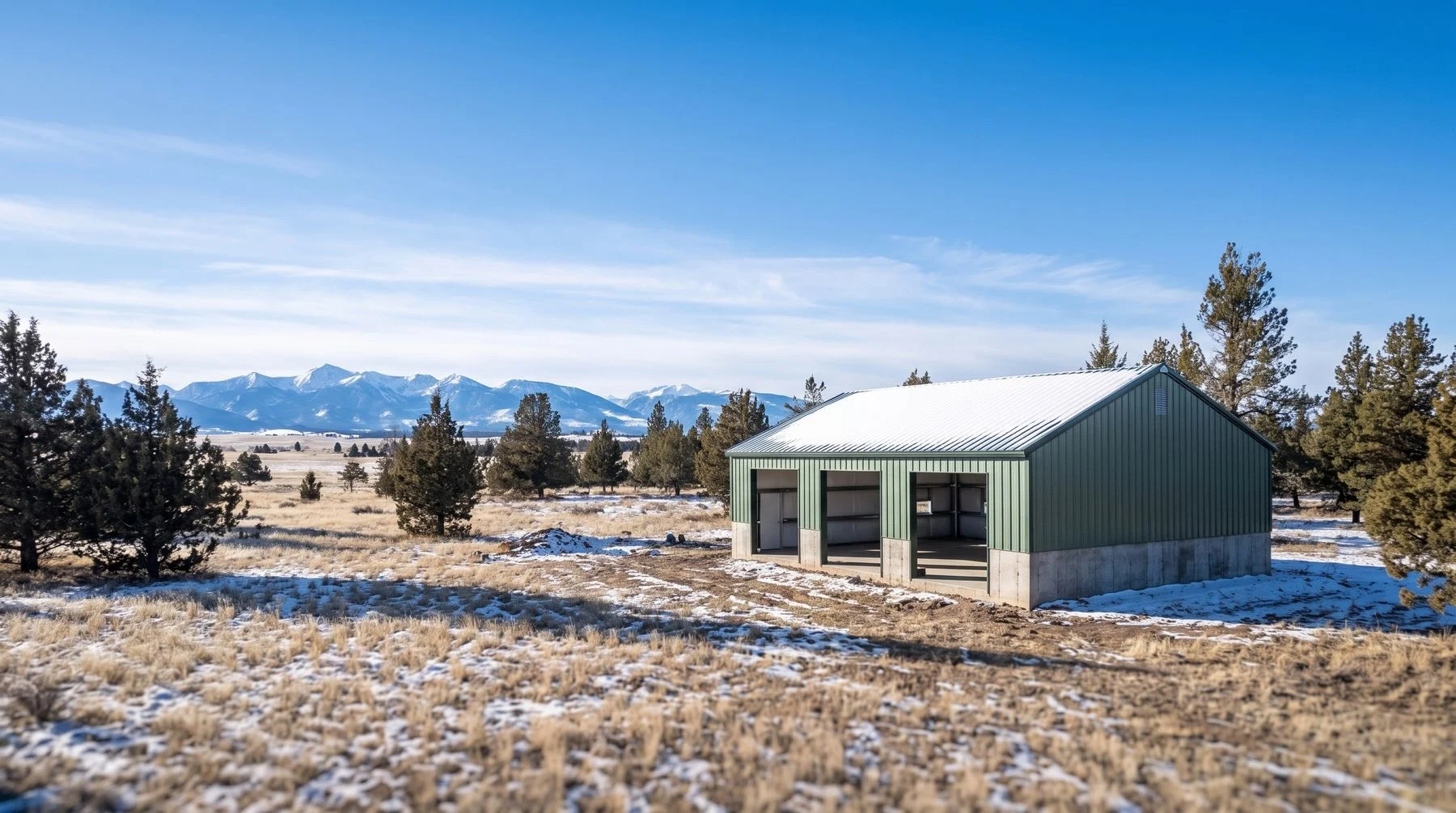
Stalcup Construction is licensed in Montana and covers the state from Billings to the Flathead. Cheap land keeps storage horizontal here, which means drive-up rows and RV bays rather than floors stacked above each other.
Agriculture and energy logistics drive most of the industrial steel that gets built, and snow governs the structure, so the roof is designed before anything else.
Licensing
Licensed and insured in Montana.
Stalcup Construction holds a Montana contractor registration and carries insurance for commercial work in the state. Montana is one of eight states we are licensed in. Registration is verifiable through the Montana Department of Labor and Industry under the company name, which is a check worth running on any out-of-state subcontractor.
Both services
Both services, across Montana.
Cold-formed steel framing
Steel stud framing, structural where the drawings call for it and not where they do not. In Montana that usually means the units inside a storage facility rather than load-bearing floors stacked above them.
PEMB steel buildings
Clear-span pre-engineered buildings, assembled on-site. Equipment and fleet buildings, agricultural structures, and the shells storage operators put up across a wide site here rather than a tall one.
What Montana is building
The direct opposite of Washington.
Billings anchors the state's commercial activity
It is the largest market and the one that draws the most consistent institutional investment, sitting where I-90 and I-94 meet with the Yellowstone Valley behind it. Most of what gets built at scale in Montana gets built there or gets built by someone based there.
Agriculture and energy logistics generate the industrial demand
This is the difference between Montana and every coastal state we work in. The buildings that go up here serve equipment, inputs, crop storage and fleet. They are not distribution centers feeding dense population, and they are not sized or specified like them.
The growth valleys are pulling ahead of the rest of the state
The Gallatin Valley around Bozeman has drawn remote workers and technology employers and is short of quality industrial and manufacturing space. The Flathead Valley around Kalispell has lower barriers to entry and is where developers with an appetite for value-add work are looking.
Land is cheap, so storage stays horizontal
This is the direct opposite of Washington. There is no land-cost pressure forcing a facility upward, so the format is drive-up rows, RV and boat bays, and expansion sideways when demand grows. That is a different building, a different foundation and a different framing package from a Puget Sound infill tower, and anyone quoting you one when you need the other has not looked at the site.
What it needs built
What Montana needs built.
Cheap land means storage spreads out rather than stacking upward, so the format is long single-level rows and taller RV or boat bays rather than floors.
Equipment, inputs and crop storage all need clear span and a roof engineered for the snow that will sit on top of it through a Montana winter unaided.
Field logistics, equipment cover and fleet buildings follow the energy and resource sector, and almost all of them end up being pre-engineered steel too.
Why Stalcup in Montana
Crews mobilize and stay.
Montana is large and thinly populated, and the distance between its towns is the real problem on any project. A contractor based in one valley is a long way from the next one, and a crew that drives two hours each way is losing half a day before it picks up a tool.
That is the problem our model was built around. Crews mobilize and stay on site through the work. Whether the job is in Billings, Kalispell or somewhere with no town attached to it, the crew is there for the duration rather than commuting to it.
The structural point matters as much. Snow and cold govern here, which means the roof and the frame get designed before anything else on the building does. A pre-engineered building arrives with that already engineered into the frame and the connections, rather than being worked out on site by people hoping for the best.
We are licensed in the state, and the practical floor is around $50,000 once crews are traveling.
Owners and operators who hire direct
We build them, we do not ship them flat.
A lot of Montana work does not come through a general contractor at all. It comes from a rancher, an operator or a developer who knows exactly what they need and wants to talk to whoever is going to build it.
We take that work directly. Shop buildings, equipment storage, agricultural structures, fleet space and storage facilities, from around $50,000 once crews are traveling to the site.
The distinction worth making, because most of what ranks for a steel building in Montana is the other thing: we build them, we do not ship them flat. A catalog building arrives on a truck and leaves you hunting for someone to stand it up. We are the ones who stand it up, and who frame the inside of it.
Where we work
Where we work in Montana.
I-90 and I-15 carry most of it and our crews travel the rest.
Frequently asked questions
Four about this state.
Which parts of Montana do you cover?
How do you handle Montana snow loads?
Do you travel to remote Montana sites?
Do you build agricultural buildings?
Keep going
Send a drawing set and we will price it
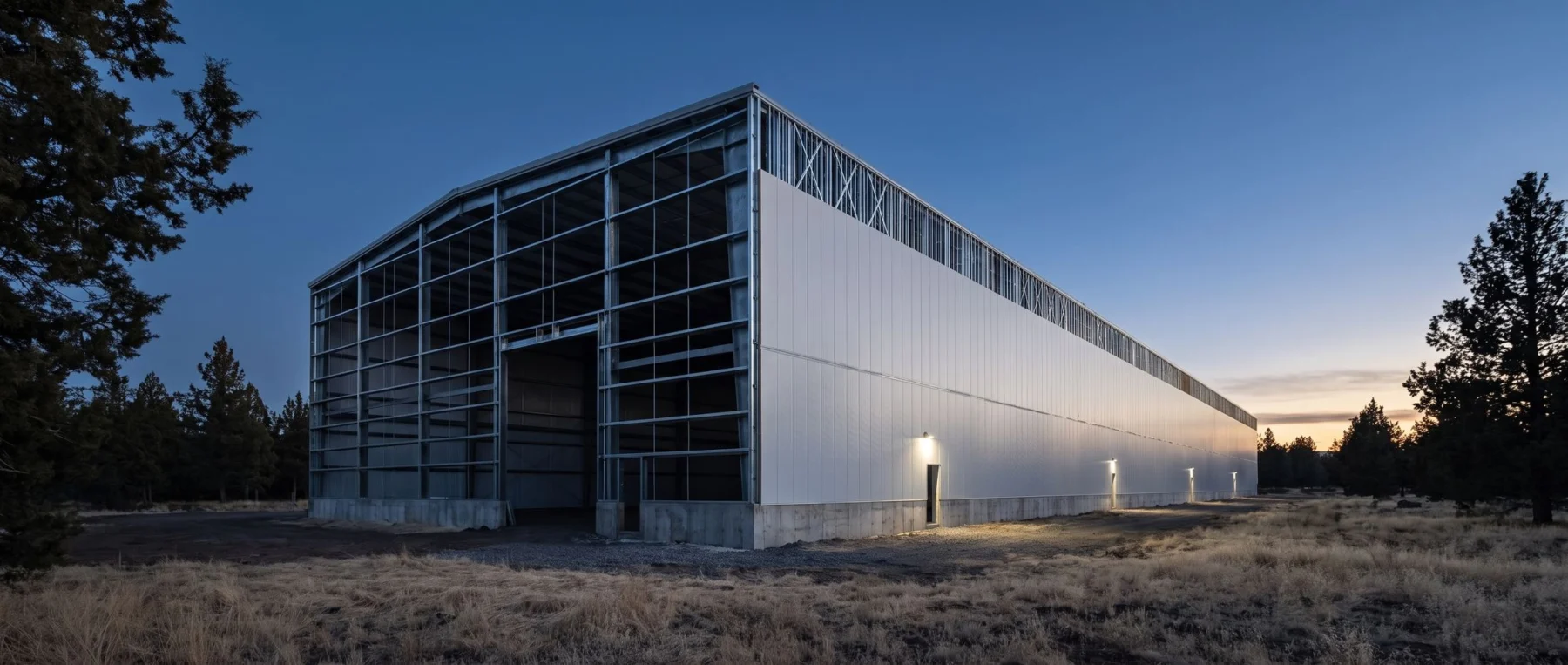
A roof engineered before anything else on the building.
Crews mobilize out of Central Oregon and stay on site until the work is finished.