

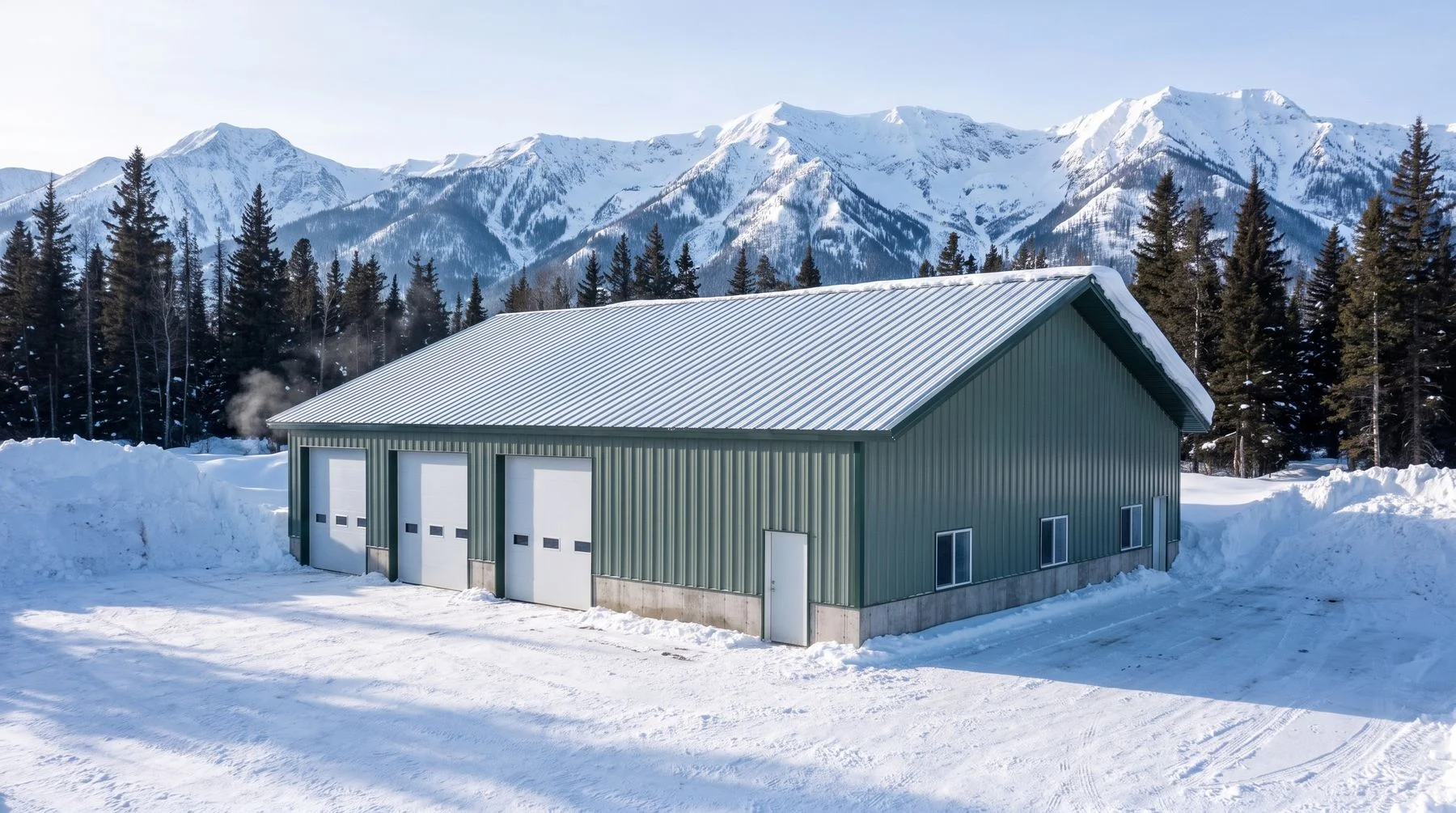
Home/ Service areas/ Alaska
Service area / AK
Commercial steel framing and PEMB erection in Alaska
Stalcup Construction is licensed in Alaska and builds around the realities of working there: a short season, long freight lead times and sites a long way from the nearest crew. Pre-engineered steel arrives cut, punched and ready to bolt, and our crews mobilize and stay until the building is up.
In short
The season is the constraint.
Stalcup Construction is licensed in Alaska and frames and erects commercial steel across the state. The Alaskan building season runs roughly May to September, so the schedule governs everything, and steel arrives by ocean, which makes lead time a design decision rather than a detail.
Bolt-together buildings need no field welding, so erection moves at the pace of the season.
Licensing
Licensed and insured in Alaska.
Stalcup Construction holds an Alaska contractor registration and carries insurance for commercial work in the state. Alaska is one of eight states we work in. Under Alaska Statute 08.18 any contractor working on a structure must be registered, and status is verifiable through the Division of Corporations, Business and Professional Licensing under the company name.
Both services
Both services, across Alaska.
Cold-formed steel framing
Steel stud framing, load-bearing and not, put up by our own crews. In Alaska the value of it is speed: interior framing that goes in fast while the building is closed in and the weather window is open.
PEMB steel buildings
Clear-span pre-engineered buildings, delivered cut and punched and assembled on-site. No field welding and no field fabrication, which is precisely the property a compressed season demands of a structure.
What Alaska is building
A schedule that slips does not slip by a month.
The season is the constraint that governs everything
Outdoor work runs roughly May through September, in a stretch of year with seventeen to twenty-four hours of daylight. A schedule that slips in Alaska does not slip by a month, it slips to next year. Every other decision on an Alaskan project sits downstream of that one fact.
Materials travel by ocean and cannot be replaced overnight
A delayed steel shipment is not an inconvenience here, it is a lost season. Ordering into a realistic lead time, and choosing a building system that arrives complete rather than needing fabrication on site, is how that risk gets managed rather than absorbed.
The economy runs on energy, mining, fishing and defense
Every one of those needs durable engineered structures that work in hard conditions: equipment shelter, processing space, hangars, cold storage, and the fleet and logistics buildings that keep all of it moving.
Two markets carry most of the commercial work
The Anchorage Bowl and the Mat-Su Valley are the primary commercial and industrial center. Fairbanks and the Fairbanks North Star Borough carry military, energy and logistics demand, which is a different mix of buildings than the south.
What it needs built
What Alaska needs built.
Aviation is transport infrastructure in Alaska rather than a hobby, and a hangar is a door-width problem that clear-span steel solves without interior columns.
Fishing, energy and logistics all need conditioned and sheltered space, and the envelope has to do real work rather than simply hold the weather off a shell.
Resource operations need hard-wearing shelter for gear that cannot be allowed to freeze up, sit wet, or go out of service in the middle of a short season.
Why Stalcup in Alaska
Crews mobilize and stay.
A pre-engineered building suits a short season better than almost anything else. The parts arrive cut, punched and numbered. There is no field welding and no field fabrication. The building goes up at the pace a crew can bolt and torque it, which is exactly the property you want when the calendar is the binding constraint rather than the budget.
A traveling crew is the normal arrangement here, not a compromise. We have always mobilized crews and kept them on site through the job rather than commuting to it. In Alaska that is simply how the work gets done, which means our model is one that already exists rather than one built for the occasion.
Lead time gets planned, not discovered. Ordering steel into an ocean-freight schedule is part of the job rather than a procurement detail someone handles later. Treating it that way is the difference between opening this year and opening next.
Owners and operators who hire direct
We are the crew that shows up and puts it together.
Plenty of Alaskan work comes straight from the operator, and we take it that way. Shop buildings, hangars, equipment shelter and cold storage, built direct for owners from around $50,000 once crews are traveling.
The distinction matters more here than anywhere else we work: we erect buildings, we do not sell kits. A kit shipped north still leaves you to find somebody to put it up, and to find them inside a four-month window in a state where crews are scarce and already committed. That is the actual problem, and selling you a building on a barge does not solve it.
Where we work
Where we work in Alaska.
Crews fly in, work the job, and stay until the building is closed in.
Frequently asked questions
Four about this state.
Can you build in Alaska within one season?
How does steel get to an Alaskan site?
Do you send crews to Alaska or hire local?
Which Alaska markets do you cover?
Keep going
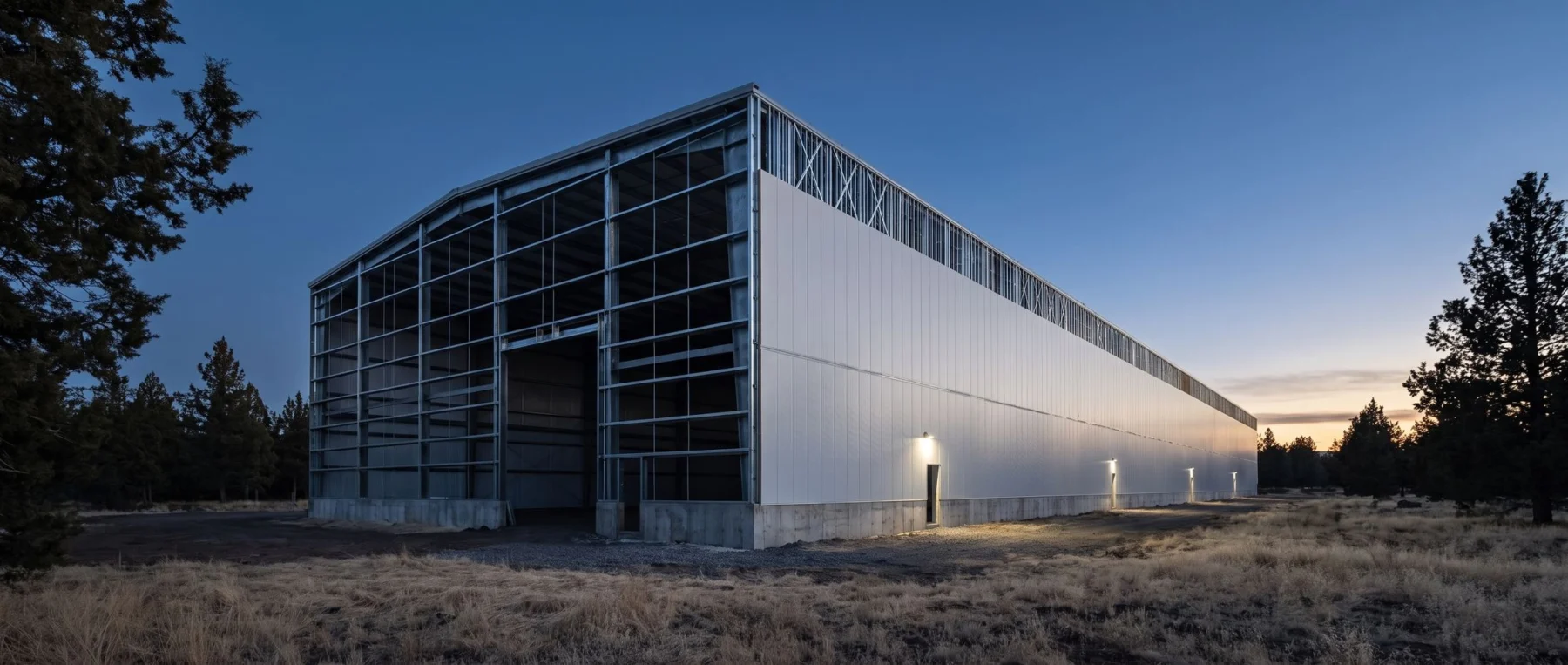
Send a drawing set and we will price it
A building system built for a short season.
Crews mobilize out of Central Oregon and stay on site until the work is finished.