

Home/ Service areas/ Oregon
Service area / OR
Commercial steel framing and PEMB erection in Oregon
Stalcup Construction is based in Bend and builds across Oregon, from Central Oregon industrial work to the Willamette Valley. We framed a five-story storage facility in Eugene, erected conditioned boat storage in Redmond, and run steel stud framing on retail remodels close to home.
In short
Home state. No travel in the number.
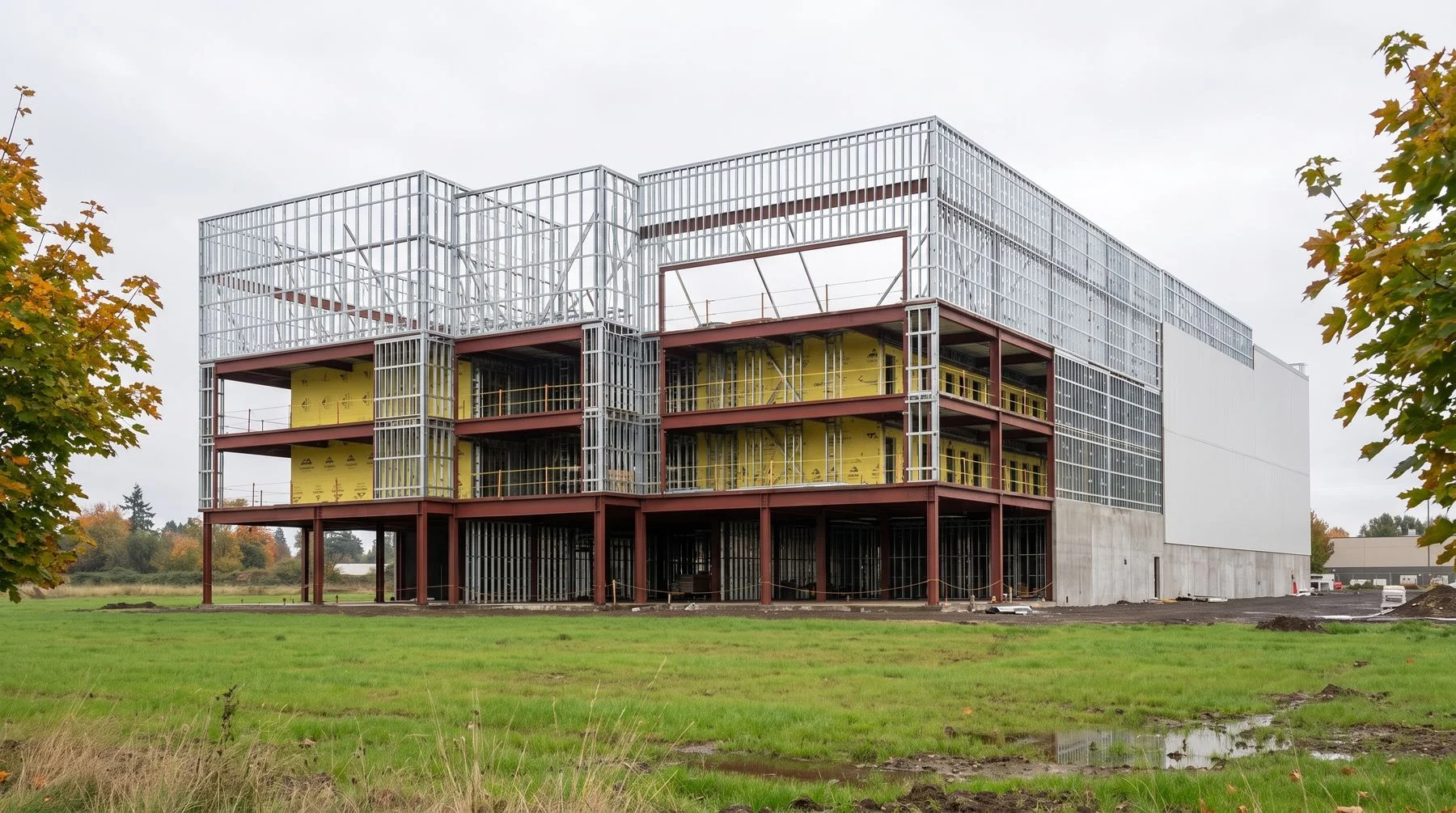
Stalcup Construction is an Oregon company based in Bend, building commercial steel across the state. The company framed a five-story U-Haul facility in Eugene, red iron below and load-bearing cold-formed steel above, and erected conditioned boat storage in Redmond.
Redmond is adding industrial land around Roberts Field, the airport the city owns and operates.
Licensing
Licensed and insured in Oregon.
Stalcup Construction is an Oregon company, licensed and insured for commercial work in the state and headquartered at 22370 Erickson Road, Bend, OR 97701. Oregon is one of eight states we are licensed in, and the only one where the shop, the equipment and the crews are local rather than traveling.
Both services
Both services, across Oregon.
Cold-formed steel framing
Steel stud framing, structural and non-structural, by our own crews. In Oregon it runs from interior retail work on a remodel close to home up to the load-bearing floors of a five-story facility.
PEMB steel buildings
Clear-span pre-engineered buildings, erected by our own crews. Conditioned boat storage in Redmond, shop and industrial space around Central Oregon, and warehouse shells down the Willamette Valley to Eugene.
What Oregon is building
Two climates, one state, and an airport adding industrial land.
Redmond is adding industrial land around its airport
Roberts Field is owned and operated by the City of Redmond and is the third-largest commercial service airport in Oregon. The city has been expanding its industrial land on the east side through a land swap with Deschutes County, zoned for light and heavy industrial use. That is clear-span shell work and hangar work, and it is minutes from our shop.
Central Oregon industrial space is tight
Vacancy in Bend and Redmond has been running low, with the strongest demand for smaller flexible units rather than large boxes. Tight vacancy is what pushes an owner out of leasing and into building, which is why owner-direct work exists here in a way it does not in a soft market.
Two climates, one state
High desert east of the Cascades brings snow load and a wide daily temperature swing. The Willamette Valley is wet and mild. A building designed for Prineville is not the building designed for Eugene, and the framing and envelope decisions follow the line of the Cascades rather than the state boundary.
What it needs built
What Oregon needs built.
Low vacancy in Bend and Redmond keeps pushing owners out of leasing and into building, usually in smaller flexible footprints rather than large boxes.
The Redmond Airport industrial zone is set up for aviation-related business, and a hangar is a clear-span problem that pre-engineered steel answers directly.
The high desert temperature swing makes climate control worth the extra envelope cost, for boats, equipment and anything that will not tolerate the range.
Why Stalcup in Oregon
Crews mobilize and stay.
This is home. The shop is in Bend, the crews are local to Central Oregon, and a job in Redmond or Prineville carries no travel in the number at all.
One contractor erects the shell and frames the units inside it, which is the same argument we make everywhere and is easiest to prove here, because both ends of it have been built within an hour of the office.
The range is proven in-state at both ends. Interior retail framing on a remodel close to home, and a five-story facility in Eugene. Same company, same crews.
A Portland or Eugene job is a short run down US-97 and I-5, so our crews reach the Willamette Valley without the mobilization cost an out-of-state project carries.
Eugene, and how a hybrid building goes up
The clearest answer we have to whether cold-formed steel is structural.
In Eugene we framed a five-story U-Haul storage facility, and the way it was built is worth explaining because it is not obvious from the outside. Heavy bolt-together red iron carried floors one and two. Load-bearing cold-formed steel carried three, four and five.
The logic is cost against load. Red iron is the right answer low in the building, where the load from everything above is greatest. Higher up, the load drops and cold-formed steel carries it perfectly well at a fraction of the price. Running red iron the whole way up would have worked and would have cost considerably more.
Josh Stalcup's description of it: the first two stories went up with big heavy red iron, and from the third, fourth and fifth it was cold-form framing, all of it live load and bearing.
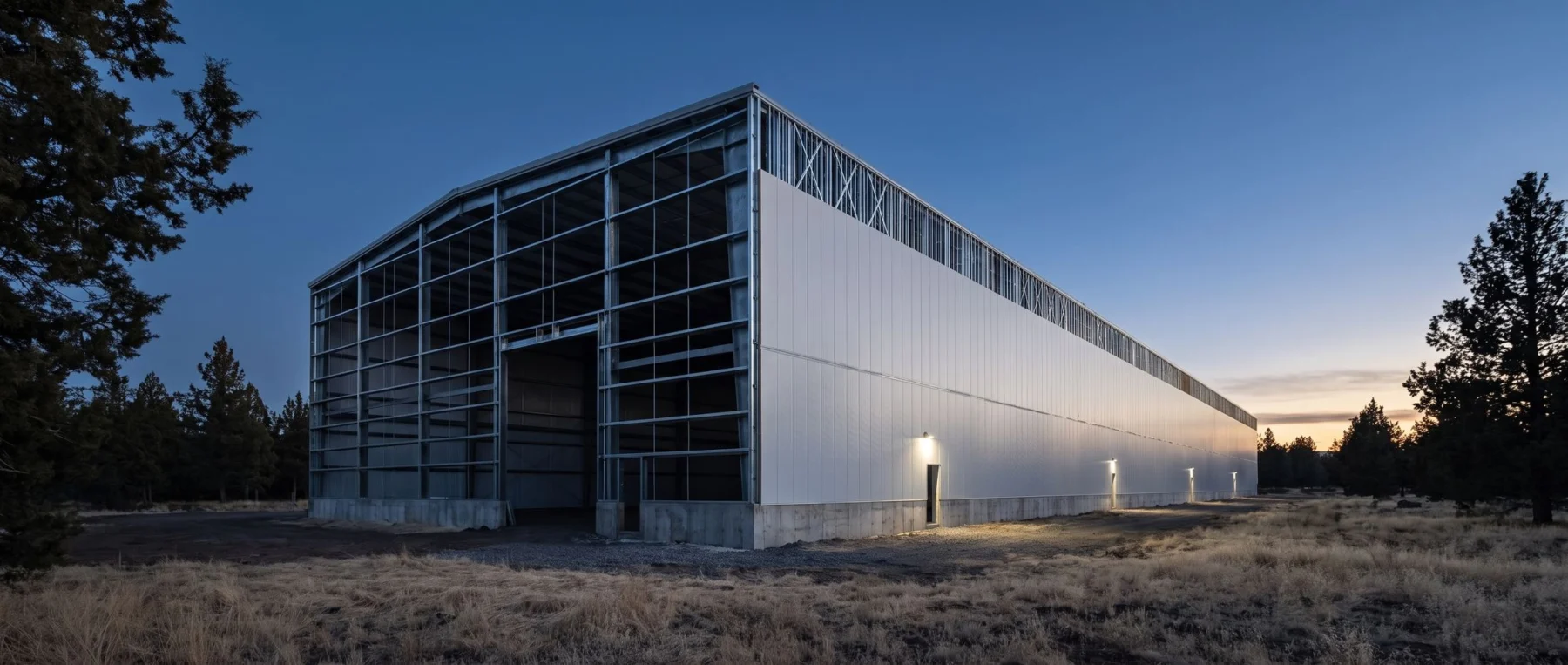
We also built climate-controlled boat storage in a pre-engineered metal building in Redmond, for a local watersports business whose customers wanted their boats kept in conditioned space rather than under a tarp through a high desert winter. Door height drives the frame, the spans run longer, and the envelope stops being weather protection and becomes part of the system holding a temperature.
Where we work
Where we work in Oregon.
Down the US-97 and I-5 corridors. Close to home there is no travel in the number.
Frequently asked questions
Four about this state.
Where is Stalcup Construction based?
Have you built multi-story storage in Oregon?
Do you build conditioned or climate-controlled storage?
Do you build aircraft hangars?
Keep going
Send a drawing set and we will price it
A five-story facility in Eugene, and a shop in Bend.
Crews mobilize out of Central Oregon and stay on site until the work is finished.